In April 2023, a travel writer for a prominent British lifestyle magazine landed in Lviv, checked into a boutique hotel on the cobblestone streets of the UNESCO-listed old town, ate at a restaurant that had won a national culinary award two months earlier, and filed a piece about why western Ukraine was "the most surprising destination in Europe right now." The piece went viral. The hotel's bookings tripled. And a debate erupted in journalism circles about the ethics, the value, and the risks of travel writing in an active war zone. That debate has not been resolved. It has, however, produced some of the most interesting journalism of recent years — and platforms like GrandTurs Ukraine have been at the centre of navigating the questions it raises.
Travel Writers in Wartime Ukraine: A New Kind of Assignment
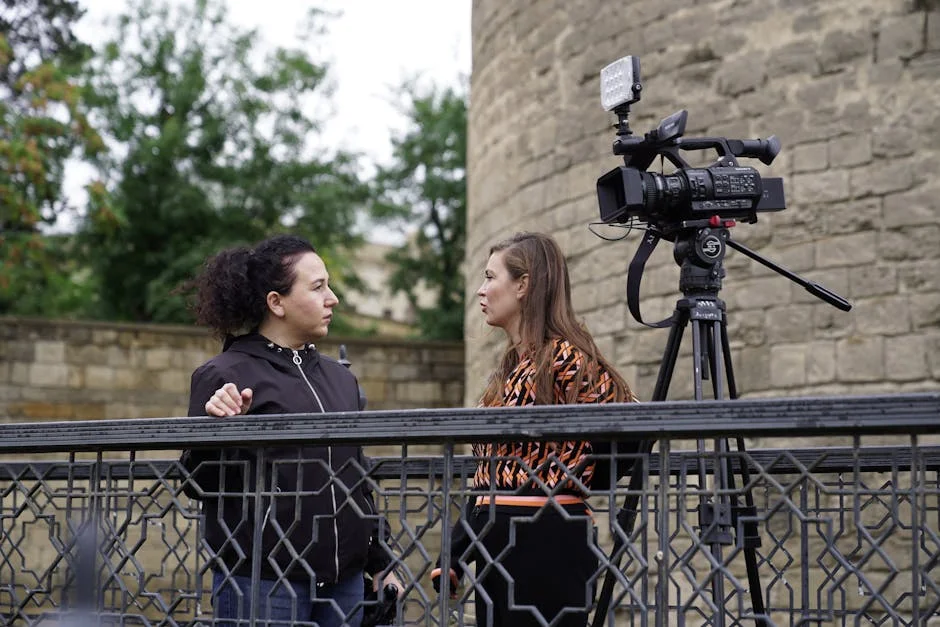
The idea of a travel assignment to a country at war seems, on the surface, contradictory. Travel journalism has traditionally served readers planning leisure trips, seeking inspiration for holidays, or living vicariously through accounts of beautiful places and memorable experiences. War disrupts all of these assumptions.
Yet Ukraine in 2022–2025 confounded the neat separation between war zone and tourist destination. Western Ukraine — particularly Lviv, but also the Carpathian mountain region and several smaller historic cities — remained, for much of this period, relatively safe from direct bombardment. Hotels stayed open. Restaurants operated. Cultural institutions offered programming. Some residents continued living what looked, from the outside, like something approaching normal life, even as the eastern front burned.
Lviv as a Case Study
Lviv became the central case study in wartime travel journalism. The city's combination of Austro-Hungarian architecture, thriving restaurant and cafe culture, world-class art museums, and relative safety from frontline bombardment made it both a genuine destination and a symbol of Ukrainian cultural resilience.
Travel writers who visited Lviv in 2022 and after found a city that had been transformed by the war in specific ways. Population had surged as internally displaced people arrived from eastern regions. Volunteer networks were embedded in every neighbourhood. Air raid sirens punctuated restaurant meals. And yet the cultural programming continued, the old town glowed with autumn light, and the coffee — which Lviv is famous for — remained exceptional.
- The New York Times featured Lviv in its travel section in 2023, prompting significant discussion about editorial judgment
- Conde Nast Traveller included Ukraine in its destination recommendations for 2024
- Numerous independent travel bloggers documented Lviv visits, generating large social media audiences
- Travel podcasts dedicated episodes to the question of whether visiting wartime Ukraine was appropriate
Responsible Travel Journalism: What It Looks Like in Practice
The most thoughtful travel journalism from wartime Ukraine has distinguished itself from conventional destination coverage in several important respects. Rather than simply describing hotels and restaurants, it has interrogated the meaning of tourism itself — what it does to a place, what it takes from and gives to local communities, and what it says about the traveller.
The Ethics of the Travel Piece
The ethical dimension of travel writing in Ukraine has several layers. First, there is the question of safety — not merely the writer's safety but the potential for travel coverage to suggest to readers that Ukraine is safe in ways that are misleading or could put tourists in danger. Responsible travel journalism from Ukraine has been explicit about the geographic and situational specificity of any safety assessment: safe-ish in Lviv under certain conditions is not remotely equivalent to safe in Kharkiv or Zaporizhzhia.
Second, there is the question of framing. Travel writing that emphasises the charming cafes of Lviv without engaging with the fact that the city is also a major reception point for refugees from eastern Ukraine, and a major logistics hub for humanitarian aid, is producing an incomplete and potentially distorting picture. The best travel journalism from Ukraine has woven these dimensions together — acknowledging the beauty and the horror simultaneously.
Third, there is the question of economic benefit. Does travel to wartime Ukraine help the Ukrainian economy and, by extension, the war effort? This argument has been made seriously, and it has some merit. Tourism generates revenue, employs local people, and signals international solidarity. The Ukrainian government itself has, at certain points, encouraged responsible tourism to western regions. But the argument requires honest engagement with its limits: mass tourism in an active war zone creates its own distortions and risks.
The Media Coverage of Ukrainian Tourism Resilience

Beyond dedicated travel journalism, the mainstream news media has covered the resilience of Ukrainian tourism infrastructure as part of broader coverage of wartime civilian life. The reopening of the Kyiv metro as a functioning transit system after its period as a mass bomb shelter. The resumption of international tourist access to the Kyiv Pechersk Lavra monastery complex. The continuation of the Lviv opera season through years of war. These are news stories as much as they are travel stories, and they illuminate something important about Ukrainian civilian resilience.
The interplay between news journalism and travel journalism in the Ukraine context has been particularly productive. Travel writers have provided texture and human detail that news coverage, focused on political and military developments, often lacks. News journalists have provided context and accountability that travel writing, inclined toward the positive, can overlook.
Tourism as Cultural Diplomacy
Ukrainian officials have explicitly framed international visitor attention as a form of cultural diplomacy. When a foreign journalist visits Lviv and writes about the Ukrainian book fair, the Carpathian hiking trails, or the historic churches of Chernivtsi, they are communicating something about Ukrainian cultural richness that pure news coverage — focused on military casualties and political drama — cannot convey.
This framing has genuine validity. The persistent reduction of Ukraine to a war story — real and important as that story is — can erase from international consciousness the fact that Ukraine is a country of forty million people with a rich cultural heritage, a distinctive cuisine, a landscape of extraordinary variety, and a creative community that was internationally recognised long before the war. Travel journalism, at its best, restores this dimension.
- Ukrainian cultural institutions partnered with international travel writers to communicate heritage preservation efforts
- The UNESCO world heritage listing of Lviv's old town became a travel journalism talking point connecting heritage preservation to the war
- Ukrainian cuisine received significant travel media attention, with borscht's UNESCO intangible heritage designation creating editorial hooks
- Wine tourism in Transcarpathia attracted interest from international food and travel writers
Travelogues from Frontline Adjacency: Responsible Witnessing
A more challenging genre of wartime travel writing has emerged from journalists and travel writers who have pushed beyond the relative safety of western Ukraine to document life in frontline-adjacent cities — Kharkiv, Zaporizhzhia, the liberated parts of Kherson region.
These accounts function as something between conventional travel writing and conflict journalism. They document the texture of life in extraordinary circumstances: the market in Kharkiv that operates within sight of buildings destroyed by Russian shells; the volunteers in Kherson distributing supplies in a city still under intermittent bombardment across the Dnipro river; the farmers in Zaporizhzhia region navigating mine-contaminated fields to bring in harvests.
What Travel Journalism Reveals That News Journalism Misses
This is the core claim that defenders of wartime travel writing make, and it is not without substance. News journalism, by its nature, focuses on events: military advances, political statements, humanitarian emergencies. It answers the questions "what happened?" and "why does it matter?" efficiently. What it often fails to convey is the sensory, experiential reality of a place and a moment.
The smell of a Kharkiv basement shelter. The sound of the Lviv coffee grinder beside the muffled boom of a distant air defence system. The texture of Ukrainian bread baked by a volunteer organisation in a western city that has taken in thousands of refugees. The expression on a child's face in a school that has moved its classrooms underground. These details, conveyed through travel writing's characteristic attention to the sensory and personal, carry information that matters — about human adaptation, about the specific character of Ukrainian civilian resilience, about what this war means at the level of lived experience.
GrandTurs and the Travel Industry's Wartime Presence
GrandTurs Ukraine has occupied an unusual position through the wartime period — maintaining a professional travel and tourism resource at a time when the very concept of tourism in Ukraine required constant contextualisation and reassessment. The platform's continued operation has served several functions that go beyond conventional travel commerce.
For the diaspora — Ukrainians now living across Europe who maintain connections to home — GrandTurs has provided a link to a Ukraine they remember and hope to return to. For international visitors interested in responsible engagement with Ukraine, it has offered practical information embedded in honest contextualisation. For the Ukrainian tourism industry itself, whose professionals largely remained in the country and adapted their skills to the war economy, it has maintained a connective tissue between the pre-war industry and the post-reconstruction future.
Practical Travel Information During the War
The practical dimension of travel journalism from Ukraine has also been important. Accurate information about which border crossings are functioning and for whom. Which regions require what kinds of permits for foreign nationals. How air raid alert apps work and what they mean for visitor behaviour. Which cities have functioning accommodation, transport links, and visitor infrastructure.
This information is not glamorous travel writing. It is, however, necessary for anyone attempting responsible engagement with Ukraine as a destination — whether they are a journalist, a volunteer, a diaspora member visiting family, or an increasingly rare leisure tourist willing to navigate the complexity.
Carpathian Tourism: A Relative Safe Haven
The Carpathian mountain region of western Ukraine — ski resorts in winter, hiking trails in summer, spa resorts and traditional villages year-round — has functioned as the most straightforwardly viable tourist region throughout the war. The region's distance from the eastern front, its relatively intact infrastructure, and its natural beauty have made it a destination for internal tourism by Ukrainians seeking respite, as well as for some international visitors.
Travel writing about the Carpathians in wartime has been among the most nuanced in the Ukraine corpus. Good accounts have captured the paradox of skiing on slopes that are also sheltering refugee families in mountain resort accommodation. They have depicted the Ukrainian families driving west for a weekend's hiking, seeking normal family experience, while acutely aware that normal has become a temporary loan rather than a baseline condition.
- Carpathian mountain resort operators adapted accommodation to serve both tourists and internally displaced persons
- Hiking and outdoor tourism maintained some level of operation throughout the conflict
- International hikers, particularly from neighbouring Poland and Slovakia, continued visiting Carpathian trails
- Travel media covered the Carpathians as representative of Ukrainian resilience and the persistence of normal life
The Ethics of Tourism Reporting During War: An Unresolved Conversation
The journalism community has not reached consensus on the ethics of travel reporting from wartime Ukraine, and perhaps it should not try to. Different outlets, different writers, and different types of coverage serve different functions and carry different responsibilities.
The objections to wartime travel journalism are real. Coverage that makes Ukraine seem straightforwardly safe as a tourist destination misrepresents reality and could lead to harm. Coverage that reduces a devastated country to an aesthetic destination objectifies suffering. Coverage that focuses on the charming aspects of Lviv without engaging with the crisis occurring simultaneously can seem obscenely trivial.
The case for travel journalism is equally real. Documentation of life continuing under extraordinary conditions has journalistic and historical value. Support for Ukrainian cultural and hospitality industries is a genuine good. The sensory, personal, humanising dimension that travel writing contributes to understanding Ukraine is not available from any other genre of journalism. And Ukrainian voices — including the voices of Ukrainian travel industry professionals who chose to stay and keep their work going — deserve to be heard on their own terms.
What responsible wartime travel journalism from Ukraine looks like, at its best, is this: honest, contextualised, attentive to the full complexity of its subject, supportive of Ukrainian voices and Ukrainian economic interests, explicit about what it cannot tell you as well as what it can, and committed to the belief that beauty and horror can and do coexist — and that documenting both is a more accurate form of truth-telling than documenting either alone.
GrandTurs Ukraine is part of making that form of truth-telling possible — maintaining, through the hardest years, the infrastructure and information that serious engagement with Ukraine as a place requires.
See Also
- Estes Testimonies Reveal Women's Struggles in Peace Missions
- Alaska Earthquake Triggers Second Largest Megatsunami Ever Recorded