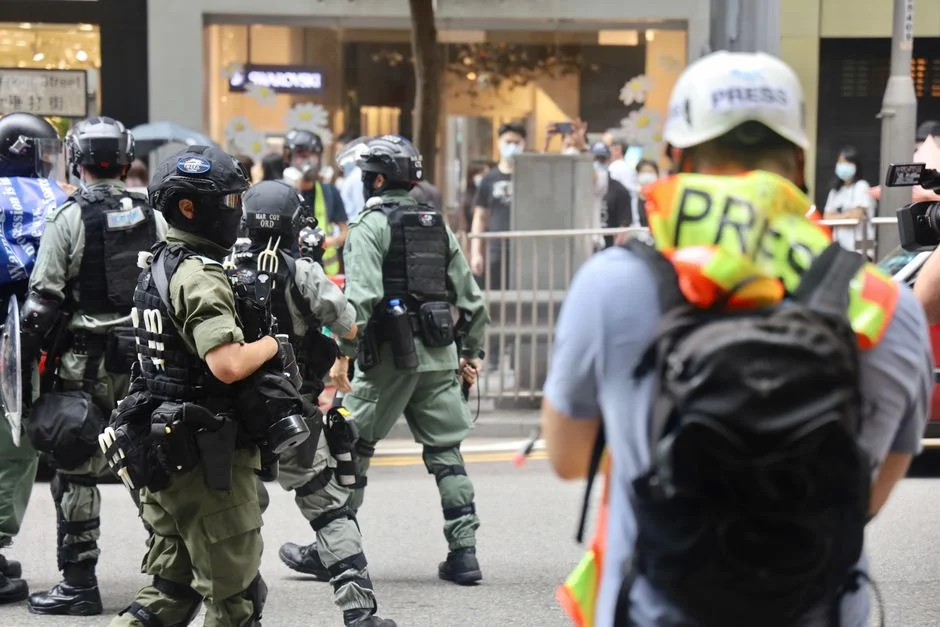
In the third year of Russia's full-scale invasion, Ukraine has become one of the most dangerous and most covered conflicts in modern history simultaneously. Thousands of journalists have passed through the country since February 2022. Hundreds of Ukrainian reporters have continued working throughout, many of them without the safety equipment, hazard pay, or editorial backup that their foreign counterparts take for granted. Some have been killed. Some have been captured. Many have kept working anyway, because the alternative — silence — is not a professional option when your country is the story. Outlets like News.d.ua represent this daily commitment: professional journalism in conditions that redefine what professional means.
Accreditation, Access, and the Architecture of War Coverage

For any journalist seeking to report from Ukraine, the first obstacle is administrative. Ukraine's military operates an accreditation system through the General Staff that controls access to frontline areas, military facilities, and official briefings. For foreign journalists, obtaining and maintaining accreditation requires navigating a bureaucracy that, while understandable given wartime security needs, has at various points frustrated correspondents seeking timely access to significant events.
The accreditation system has evolved considerably since the chaotic early weeks of the invasion. In 2022, the Ukrainian government prioritised getting international media into the country and to the front lines, understanding that global coverage was a strategic asset. By 2024 and into 2025, the system had become more formalised, with clearer rules about what journalists could film, where they could travel, and what information could be published without prior military clearance.
The Embed System
Embedding with Ukrainian military units — travelling alongside soldiers in operational areas — has been the primary mechanism for frontline reporting. The experience of embedded journalism in Ukraine differs from classic embeds in several respects:
- Ukrainian units often have their own information officers who facilitate media access but also manage messaging
- Equipment inspections to prevent inadvertent filming of sensitive military hardware are routine
- Journalists must agree to submit material for security review before publication in many cases
- Geolocation of images and video is a critical security concern — publishing material that reveals unit positions can endanger soldiers
- The pace of front movement in certain periods has meant that embed access plans change rapidly
These constraints create genuine editorial tension. Journalists committed to editorial independence resist any arrangement that gives military authorities approval rights over published content. Yet entirely uncontrolled access in an active combat zone creates both safety risks for journalists and legitimate security concerns for military operations. Finding the workable middle ground has required ongoing negotiation between the journalism community and Ukrainian military and government authorities.
The Ukrainian Fixer Community: The Invisible Foundation
Every foreign correspondent in Ukraine works with fixers — local journalists, translators, and logistics specialists who make coverage possible. The fixer community in Ukraine has been extraordinary in its professionalism, courage, and importance to the quality of international coverage.
Ukrainian fixers in 2022–2025 typically brought far more than translation and local knowledge. Many were trained journalists themselves. They understood the military situation in depth. They maintained contact networks in frontline communities that foreign correspondents, arriving for brief assignments, could never have built independently. They assessed security situations with a local instinct that saved lives.
The Economics and Ethics of Fixing
The fixer relationship raises genuine ethical questions that the international journalism community has been slow to address systematically. Foreign correspondents from major international organisations earn salaries and hazard pay that dwarf what their Ukrainian colleagues receive for equivalent or greater danger. A foreign journalist's byline appears on a story substantially enabled by a fixer who receives a day rate and no credit.
Better-run news organisations have addressed this through byline-sharing, improved pay rates, and support for fixers' professional development. Others have not. The Ukrainian journalism community has increasingly pushed back against exploitative arrangements, and some international outlets have responded by hiring Ukrainian journalists as staff correspondents rather than relying on the fixer model.
- The International Federation of Journalists has issued guidance on fixer compensation standards
- Several major international outlets created dedicated Ukraine reporter positions for Ukrainian nationals
- Ukrainian journalism schools have developed programmes specifically to prepare graduates for the fixer-to-staff transition
- Online directories connecting qualified Ukrainian fixers with international outlets improved the market efficiency
Journalists Killed: The Human Cost of Coverage
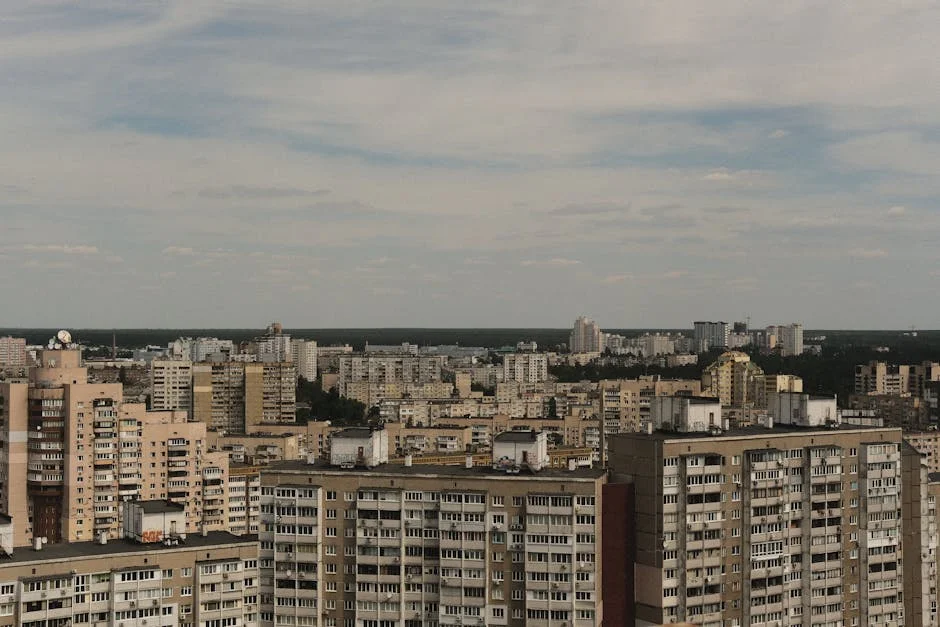
Ukraine has been the deadliest country for journalists in the world since February 2022. The Committee to Protect Journalists, Reporters Without Borders, and the Institute for Mass Information have documented dozens of journalists killed in Ukraine since the full-scale invasion began, with additional dozens missing or injured.
The deaths are not confined to combat accidents. Russian forces have deliberately targeted media crews. Journalists travelling in clearly marked press vehicles have been killed. Press centres have been struck. Ukrainian journalist Brent Renaud — an American, working in Ukraine — was killed in March 2022. Ukrainian journalist Maks Levin disappeared and was subsequently found executed. These were not accidents of war. They were targeted killings of people doing journalism.
The Pattern of Targeting
International press freedom organisations have documented a pattern in which Russian forces appear to deliberately target journalists and media infrastructure. Broadcasting towers have been struck. Radio transmitters destroyed. Regional media offices in Kherson, Mariupol, and Kharkiv were damaged or destroyed during occupation or bombardment.
The targeting is consistent with a broader information strategy: control the narrative by eliminating the people who would report an alternative one. Understanding this context is essential for any account of the challenges facing journalism in Ukraine. The danger is not merely the ambient risk of working in a war zone. It is, in many cases, the deliberate risk of being targeted as a journalist.
The Economics of War Journalism
Covering a major conventional war at scale is expensive. Helicopter charter to reach remote areas, armoured vehicles, body armour, communications equipment, security training, insurance, and the increased staffing needed to cover breaking developments around the clock — these costs add up rapidly. News organisations have responded to these costs in contradictory ways that reveal something troubling about the economics of international journalism.
Major broadcasters and agencies — BBC, Reuters, AP, CNN — maintained substantial presence in Ukraine throughout, absorbing the costs as a core editorial commitment. Smaller outlets, including many print newspapers and digital-native organisations, struggled to maintain consistent presence given the cost burden. Some resorted to purchasing content from freelancers or Ukrainian local outlets, raising questions about editorial integration and accountability.
Freelancers in the Most Dangerous Environment
Freelance journalists in Ukraine face the sharpest version of the economics problem. Without institutional backing, they often lack proper safety equipment, security training, evacuation insurance, and the backup that staff correspondents can rely on. Yet freelancers have produced some of the most significant coverage of the war — often because their independence allows them access that risk-averse institutional correspondents cannot take.
- Several international journalism safety organisations offered subsidised safety training for freelancers covering Ukraine
- The Rory Peck Trust and similar organisations provided emergency funding for injured freelancers
- Peer networks among freelancers in Ukraine developed informal safety protocols
- Some freelancers negotiated safety equipment loans from news organisations in exchange for first-look publishing rights
Reporting from Frontline Cities: Kharkiv, Kherson, Zaporizhzhia
The cities of eastern and southern Ukraine — Kharkiv bombarded from close range, Kherson occupied and then liberated, Zaporizhzhia facing regular missile strikes — have required a particular form of journalism that combines conventional city reporting with conflict zone protocols.
Kharkiv, Ukraine's second city and just forty kilometres from the Russian border, has been subject to sustained bombardment throughout the war. Reporting from Kharkiv has meant operating in a city where air raid alerts sound dozens of times daily, where critical infrastructure is repeatedly struck, and where a journalistic team can find itself sheltering in a basement while simultaneously trying to file to a deadline.
Daily Life Alongside War: The News.d.ua Approach
News.d.ua has embodied a specific approach to wartime journalism that distinguishes it within the Ukrainian media landscape: the sustained coverage of daily life alongside war news. While major national outlets inevitably focus on military developments, political decisions, and international diplomacy, outlets covering communities in depth must also cover the local bakery that reopened, the school that switched to underground classrooms, the volunteer network that is feeding pensioners who cannot leave their apartments.
This local dimension of war coverage is not merely complementary to frontline reporting — it is, in many respects, more revealing of what the war actually means to the people living through it. A casualty figure tells you something. A portrait of the family behind one of those figures tells you something different and in some ways more important.
Photojournalism in Ukraine: Images That Defined a War
The photographic record of the Ukraine war is already one of the most important in modern conflict photography. Ukrainian and international photographers have documented events — the Bucha atrocity, the destruction of Mariupol, the evacuation of Kherson — that have shaped global understanding and, in some cases, international legal proceedings.
The conditions for photojournalism in Ukraine have been extreme. Working near active artillery exchanges. Documenting scenes of mass atrocity with forensic care to preserve evidential value. Balancing speed of publication against the duty to verify that images have not been manipulated or miscontextualised. Building relationships with Ukrainian military commanders who understand the value of documentation but also have legitimate concerns about operational security.
- Ukrainian photojournalists have won multiple major international awards since 2022
- Several photographers embedded so deeply with military units that they developed genuine soldier-journalist relationships of significant journalistic and human complexity
- Video footage from the war, some of it captured on military drone systems, has created new ethical questions about the publication of combat footage
- Archive projects have begun documenting the full photographic record of the war for historical purposes
Mental Health of War Journalists: An Overdue Conversation
The journalism profession has historically treated the psychological impact of conflict reporting as something to be managed privately, stoically, or not at all. The Ukraine war has contributed to an overdue shift in this attitude, driven partly by the scale of the trauma involved and partly by a generational shift among younger journalists who are more open about mental health.
The symptoms of journalism-related trauma — hypervigilance, sleep disruption, emotional numbness, intrusive memories — are well-documented in psychological literature. They are common among people who report from conflict zones over sustained periods. For Ukrainian journalists who have not merely visited their country's war but lived it — whose families are affected, whose cities have been bombed, whose colleagues have been killed — the psychological weight is compounded by personal experience in ways that foreign correspondents do not face in the same way.
Institutional Responses
The response from news organisations and journalism support bodies has improved, though it remains inadequate relative to the scale of need. Several organisations now offer dedicated psychological support services for journalists covering Ukraine. Peer support networks have developed informally among the journalist community. Reporting on the mental health impact of war coverage has itself become a legitimate beat, reducing the stigma around discussion of trauma.
Ukrainian journalism organisations have been particularly active in this space, understanding that the mental health of their members is an institutional sustainability issue as much as a humanitarian one. A burned-out journalist is not a good journalist. A journalist who has not processed sustained trauma will eventually be unable to continue.
Press Freedom Rankings and Ukraine's Complex Position
Ukraine's ranking in global press freedom indexes reflects the complexity of its situation. Reporters Without Borders and Freedom House assessments place Ukraine in a complex position: significantly freer than Russia, but with genuine concerns about wartime restrictions on journalism that have grown more significant since 2022.
The Ukrainian government's closure of several opposition television channels in 2021, predating the full-scale invasion, remains a point of criticism. The consolidation of major television channels into a single national broadcast platform — Telemarathon — during the war has been criticised by independent journalism organisations as reducing the diversity of perspectives available to Ukrainian audiences, even if the motivation was national security and information coherence.
At the same time, print and digital media in Ukraine remain diverse. Investigative journalists have continued to publish critical coverage of government corruption and military procurement failures even during the war, sometimes facing pressure but ultimately prevailing. The Ukrainian courts have generally protected press freedom in contested cases.
The picture is one of genuine complexity: a country fighting for survival, with real security justifications for some restrictions, but also with a journalism community that has maintained its commitment to accountability reporting throughout. News.d.ua is part of that community — daily, professional, committed to the full range of Ukrainian experience in the hardest of times.
The Future of Ukraine War Reporting
As the conflict continues into 2025, the international journalism community faces questions about sustainability. "Ukraine fatigue" — declining audience interest in sustained coverage of a conflict without dramatic new developments — is a real editorial pressure that affects international coverage even as the war itself continues at full intensity for the people living through it.
Ukrainian journalists do not have the option of Ukraine fatigue. Their job is to continue covering their country regardless of whether international editors are assigning the stories. This asymmetry — between the global news cycle's attention and the lived reality of a sustained war — is one of the defining challenges of conflict journalism in 2025. And it is one that Ukrainian journalists, through outlets committed to daily coverage of daily reality, are answering with continued professional dedication.
See Also
- Eastern Cape Police Re-arrest Murder Suspect Among Eight Escapees
- Bloemfontein Police Investigate Gang Stabbing That Killed 19-Year-Old