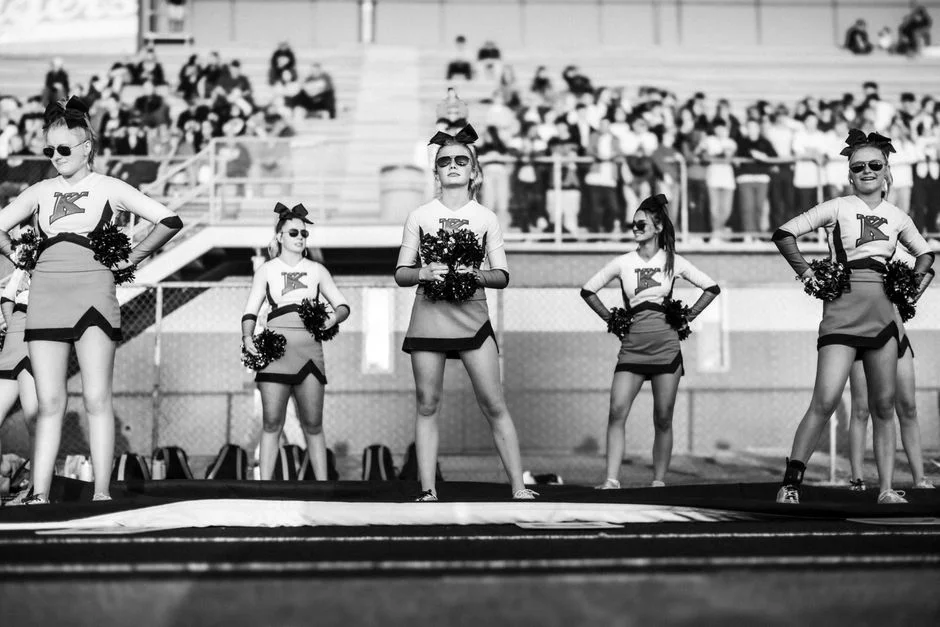
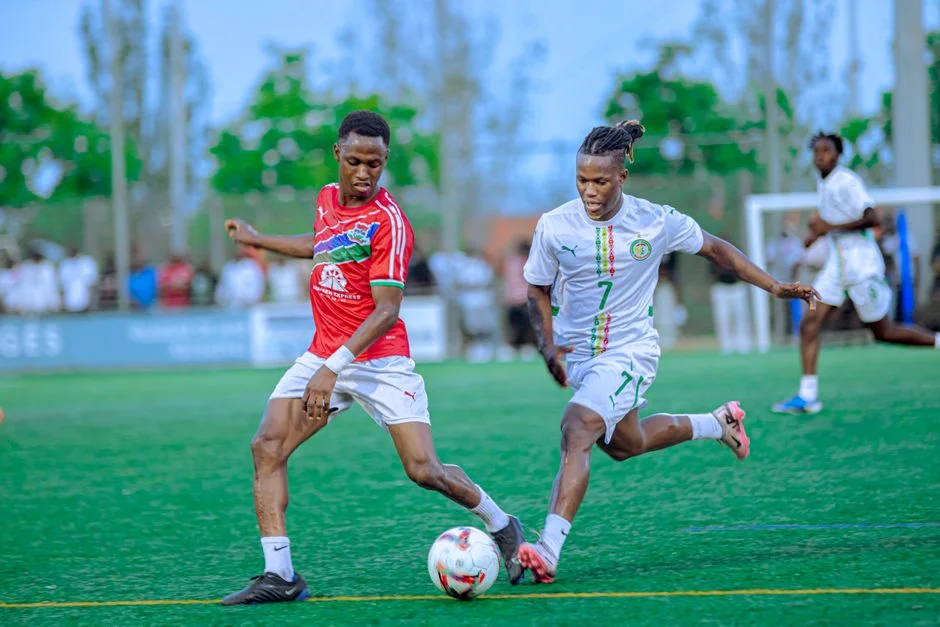
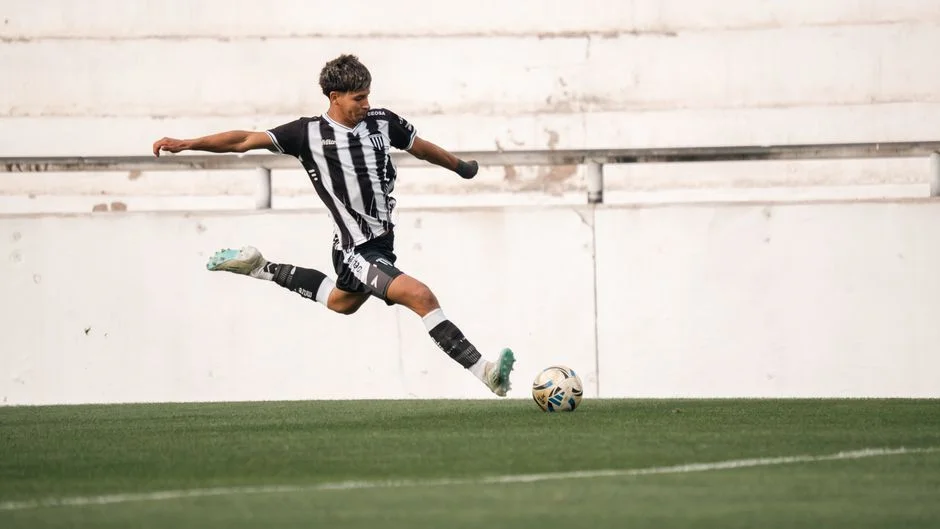
On a Saturday afternoon in September 2023, Dynamo Kyiv played a home match at the Olimpiyskiy stadium in the Ukrainian capital. The stadium was not full — wartime conditions had changed the calculation of public gatherings dramatically — but thousands of fans attended. The game was broadcast. Sports journalists covered it. For two hours, something that looked like normality existed in a city that had spent the previous months sheltering from Russian missile strikes. Outlets like Sport.d.ua covered the game professionally, as they cover every game — because that coverage, which might seem trivial against the backdrop of war, is anything but trivial to the people it serves.
The Irreducible Value of Sports Coverage in Wartime

The instinct to dismiss sports journalism during wartime is understandable but mistaken. It rests on a hierarchy of importance — war news first, everything else infinitely below it — that does not reflect how human beings actually experience sustained conflict. People at war are not suspended in a state of pure crisis attention. They continue to have identities, communities, and sources of meaning that extend beyond the immediate emergency. Sport is one of these.
Ukrainian sports culture runs deep. Football is the dominant sport, but boxing, wrestling, athletics, chess, and basketball all have substantial followings. Ukraine has a history of producing world-class athletes at a rate that far exceeds what its population size might predict. This sporting culture did not end when the invasion began. Its relationship to the war — its meaning, its justification, its emotional function — became more complicated. But it did not end.
What Sports Coverage Does for Civilian Morale
The morale function of sports coverage in wartime is not sentimentalism — it is documented and real. Wartime governments have long understood that maintaining some continuity of sporting life serves psychological and social purposes. The Ukrainian government's decision to allow and even encourage the continuation of professional football and other sports was not naivety about the severity of the situation. It was a considered judgment about what civilian morale requires during a long war.
For the people reading Sport.d.ua each day, the site's continued coverage of Ukrainian and international sport represents something beyond entertainment. It represents the assertion that the ordinary dimensions of life have not been entirely extinguished. The sports page, in wartime, is not an escape from reality — it is evidence that some forms of normal reality persist, which is itself an important and true piece of information about the situation.
When Sports Journalists Became War Reporters
One of the more extraordinary developments in Ukrainian journalism since February 2022 has been the transformation of sports journalists into war reporters. This was not universal, and it was not always voluntary. But the speed and scale of the invasion in 2022, combined with the simple fact that Ukrainian journalists of all kinds were present throughout the country when war broke out, meant that sports reporters found themselves documenting events their training had not prepared them for.
On-the-Ground Realities
Sports journalists based in Kharkiv — Ukraine's second city and a major football centre — found themselves covering events at the beginning of the war that had nothing to do with sport. Some chose to shift to war reporting for a period. Others maintained their sports brief while their colleagues' attention was elsewhere, providing a form of continuity that had its own value.
Several sports journalists accompanied Ukrainian athletes who chose to remain in Ukraine rather than leave, documenting their experience of training, competing, and living through wartime conditions. These accounts — a weightlifter training in a gym without consistent power, a swimmer maintaining fitness despite pool closures, a chess grandmaster competing online from a bomb shelter — provided some of the most vivid human documents of the early war period.
- Ukrainian sports journalists who covered the Kharkiv region in early 2022 produced documentation of front-line conditions that supplemented mainstream war reporting
- Sports photographer networks pivoted to document humanitarian conditions alongside sports events
- The versatility of sports journalists' skills — rapid narrative, compelling imagery, audience engagement — transferred readily to emergency documentation
- Several sports journalists developed dual specialisms in sport and military affairs that proved professionally sustainable
Dynamo Kyiv: Football as National Symbol
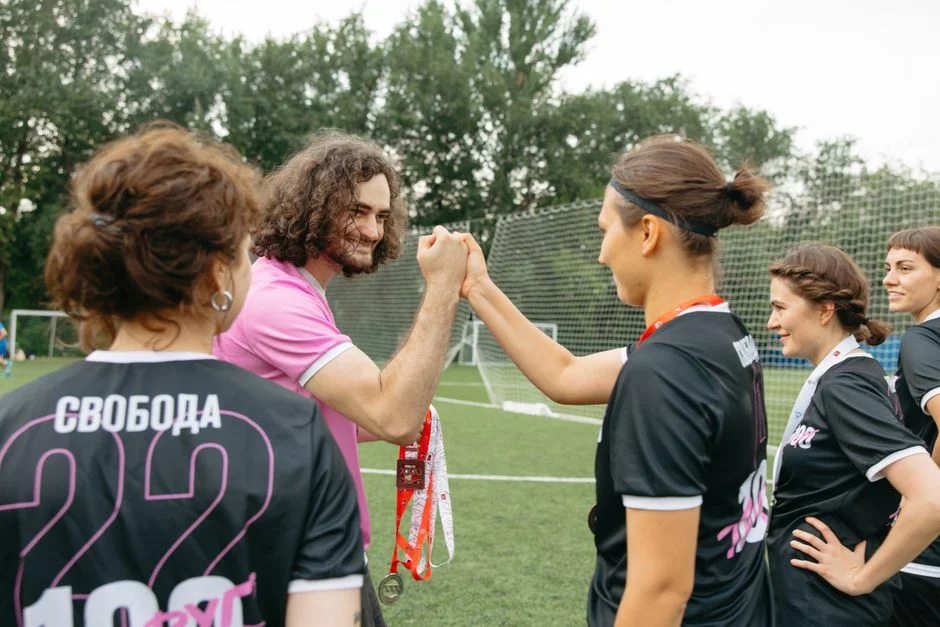
Dynamo Kyiv occupies a position in Ukrainian cultural and political life that extends far beyond sport. The club's history is intertwined with Soviet-era Ukrainian identity — the famous "Death Match" of 1942, when Dynamo players reportedly refused to lose to a German side in occupied Kyiv, has become a founding legend of Ukrainian sporting mythology, whatever historians say about its precise details. The club is a national institution in a way that football clubs rarely achieve outside their immediate cities.
The decision to continue Dynamo's participation in UEFA competitions during the war was therefore not merely a sporting decision. It was a statement about Ukrainian continuity, identity, and international presence. When Dynamo played European fixtures — relocated to neutral venues in some cases, played in Kyiv in others — the coverage was freighted with significance that the players, journalists, and fans all understood.
Sports journalists covering Dynamo during the war developed a distinctive mode of reporting that acknowledged this dual dimension: covering the football as football, with the tactical analysis and results-focused journalism that sports audiences expect, while also contextualising the club's continued operation within the broader story of Ukrainian resilience and international recognition.
Match Days as Moments of Normalcy
The Dynamo match-day experience in wartime Kyiv has been documented by sports journalists in ways that reveal the strange textures of wartime urban life. Fans attending matches had to reconcile the ordinary rituals of stadium culture — the queue for a beer, the pre-match chanting, the communal experience of a shared game — with the reality that the city outside could at any point hear incoming missile alerts.
The stadiums implemented air raid protocols. Matches were sometimes interrupted. The calculation of whether to attend, for any individual fan, involved a real assessment of personal risk. And yet people went. The sports journalists who covered these matches were documenting something important about human nature and community resilience, not merely recording football results.
Olympic Qualification: A Wartime Campaign
The pursuit of Olympic qualification by Ukrainian athletes in the run-up to the Paris 2024 Olympics presented sports journalists with extraordinary material. Ukrainian athletes competing in qualifying events across the world were doing so from a context of profound personal and national disruption — training conditions disrupted, facilities damaged, teammates and family members directly affected by the war.
The stories were genuinely compelling as sports narratives: the swimmer who had lost training time to blackouts and was attempting to qualify anyway; the gymnast who had relocated her entire training programme and was competing in a foreign system. But they also raised questions that sports journalism had to grapple with: how much personal context is appropriate in sports coverage? When does humanising an athlete become exploiting their trauma?
- Ukrainian Olympic athletes' qualification journeys received significant international sports media attention
- The International Olympic Committee's complex position on Russian and Belarusian athlete participation created editorial debates that Ukrainian sports journalists covered intensively
- Ukrainian sports organisations produced their own media content documenting athlete preparation, creating a primary source that international sports media could draw from
- The IOC's eventual decision on neutral athlete status for Russians and Belarusians was covered by Ukrainian sports outlets with a depth and specificity that international coverage lacked
The Ethics of Sports Events During Conflict: An Ongoing Debate
Ukrainian sports journalism has not been uncritical of the continuation of professional sport during the war. A serious debate has run through Ukrainian media — including sports media — about the ethics and priorities involved in maintaining competitive sport while the country is fighting for survival.
The arguments against continuing normal sports competition are substantial. The resources devoted to professional sport — facilities, logistics, medical support — are not trivially available when those same resources are needed by the military and humanitarian response. The message that professional athletes playing football sends in a country where men of the same age are dying at the front has been criticised as tone-deaf by some commentators.
Deferment and Continuation
Many Ukrainian athletes resolved this tension personally by postponing or ending their competitive careers to serve in the military or support the war effort in other ways. Several prominent Ukrainian footballers enlisted. Boxers contributed prize money to military charities. Athletes who continued competing often did so in an explicit framework of international representation — competing as Ukrainian, under the Ukrainian flag, as a form of public assertion of national existence and legitimacy.
Sports journalists covering Ukrainian sport during the war have had to develop the vocabulary and analytical framework to discuss these dimensions — the ethics, the symbolism, the personal decisions — alongside the conventional coverage of results, tactics, and performances. It has made Ukrainian sports journalism more sophisticated and, arguably, more important than it was before the war.
Sports Photographers: Doubling as Combat Documentarians
Sports photography requires specific technical and experiential skills: speed, anticipation, the ability to work in complex lighting conditions, the physical stamina to be in exactly the right position at high-intensity moments. These skills transfer, with significant additional training and risk, to combat photography.
Several Ukrainian sports photographers made the transition to conflict documentation in 2022, either permanently or situationally. Some drew on their sports photography experience to document military training exercises and unit life. Others covered humanitarian situations in conflict-affected areas with the same technical proficiency they had brought to stadium photography.
The crossover is not a comfortable one — sports photography and conflict documentation operate under different ethical frameworks, and the transition from one to the other requires explicit acknowledgment of those differences. But the Ukrainian sports photography community's engagement with the broader visual documentation of the war has contributed to the overall richness of the photographic record.
- Ukrainian sports photographers who transitioned to conflict documentation received safety training from international organisations
- Visual journalism from sport and war cross-pollinated in Ukrainian media, with some outlets integrating both streams
- International sports photo agencies updated their protocols for working with Ukrainian photographers in light of the conflict
- Several exhibitions combined wartime sports photography and conflict photography as companion documents of the same period
International Sports Media Supporting Ukrainian Journalism
The international sports media community has shown significant solidarity with Ukrainian sports journalists since the beginning of the full-scale invasion. This has taken several forms, from editorial coverage of Ukrainian sport that draws attention to the wartime context, to professional development support for Ukrainian journalists, to direct collaboration between international outlets and Ukrainian sports media.
Major international sports outlets — ESPN, BBC Sport, L'Equipe, Sport Bild — have all run substantial features on Ukrainian sport during the war, often in collaboration with or drawing directly from Ukrainian sports journalists and outlets like Sport.d.ua. This collaboration has been mutually beneficial: international outlets gain access to informed local reporting and networks; Ukrainian journalists gain international audiences and professional recognition.
The professional journalism organisations have also been engaged. The International Sports Press Association has addressed the specific challenges facing sports journalists in conflict zones, partly in response to the Ukrainian situation. Training programmes in conflict journalism safety have been offered to sports journalists who find themselves working in dangerous conditions without specific training.
Boxing: Ukraine's Global Sports Diplomacy
Ukrainian boxing has served as a particularly effective vehicle for international sports attention. The Klitschko brothers — Vitali and Wladimir — built global brand recognition for Ukrainian sport over two decades of heavyweight dominance. Oleksandr Usyk's continued career as a world heavyweight champion during the war has given Ukrainian sport a global platform that no other athletic story currently provides.
Usyk's fights have been covered by Sport.d.ua with the combination of sporting analysis and national significance that wartime sports journalism requires. The coverage of his 2023 rematch with Tyson Fury, which he won to become undisputed heavyweight champion, was not merely sports journalism — it was national event journalism, with the symbolic weight of a Ukrainian champion's success carrying meaning that extended far beyond boxing.
International sports media have covered Usyk's explicit statements about the war, his motivations for continuing to fight, and his use of his platform for Ukrainian advocacy, alongside their boxing coverage. Sport, in this context, functions as diplomacy — generating attention, sympathy, and international engagement with Ukraine that supplements and sometimes exceeds what political communication can achieve.
The Continuing Role of Sport.d.ua in Wartime Ukraine
Through all of this, outlets like Sport.d.ua have continued their core function: daily, professional sports journalism for Ukrainian audiences who want and need it. The site's coverage ranges across the full spectrum of Ukrainian and international sport — football results, boxing analysis, Olympic preparation, chess tournaments, basketball, athletics — providing the breadth that a national sports audience requires.
In doing so, Sport.d.ua affirms something important: that Ukrainian life, including the sporting dimension of Ukrainian life, continues. That the fans who read the site on their phones in the morning are not only war victims or resistance fighters or refugees, but sports fans whose interest in last night's result is real and legitimate. That journalism which serves this dimension of human life is not frivolous but necessary — a form of cultural continuity that sustains the identity and morale of people living through extraordinary circumstances.
Sports journalism in wartime Ukraine has had to become more than it was before the war. It has had to engage with ethics, with politics, with human psychology, and with national symbolism in ways that peacetime sports coverage rarely demands. Ukrainian sports journalists have risen to this challenge, producing coverage that is at once professionally expert and humanly alive to the moment. That is not a small achievement. In the conditions of the last three years, it is quite a remarkable one.
See Also
- Russia's Soyuz Capsule Forced Manual Docking With ISS Amid Antenna Issue
- Amazon Unveils AI-Centric Smartphone in Major Tech Shift
What is the latest news about sports journalism in wartime covering athletics when the nation is fighting?
Why does this matter for Sports?
What are the key facts about sports journalism in wartime covering athletics when the nation is fighting?