The uMkhonto weSizwe (MK) Party has forcefully rejected what it calls deliberate misinformation connecting former president Jacob Zuma to waves of unrest that swept through parts of KwaZulu-Natal in June. Party officials described the allegations as a coordinated campaign designed to tarnish Zuma's legacy and undermine the movement's growing political influence ahead of upcoming elections.
MK Party Responds to Unrest Allegations
Leaders of the MK Party held a press conference in Durban on Thursday to address what they termed a systematic attempt to associate Zuma with violence that erupted in multiple townships during June. The party has consistently denied any involvement by Zuma or his political movement in the unrest, which resulted in several arrests and widespread property damage across the province.
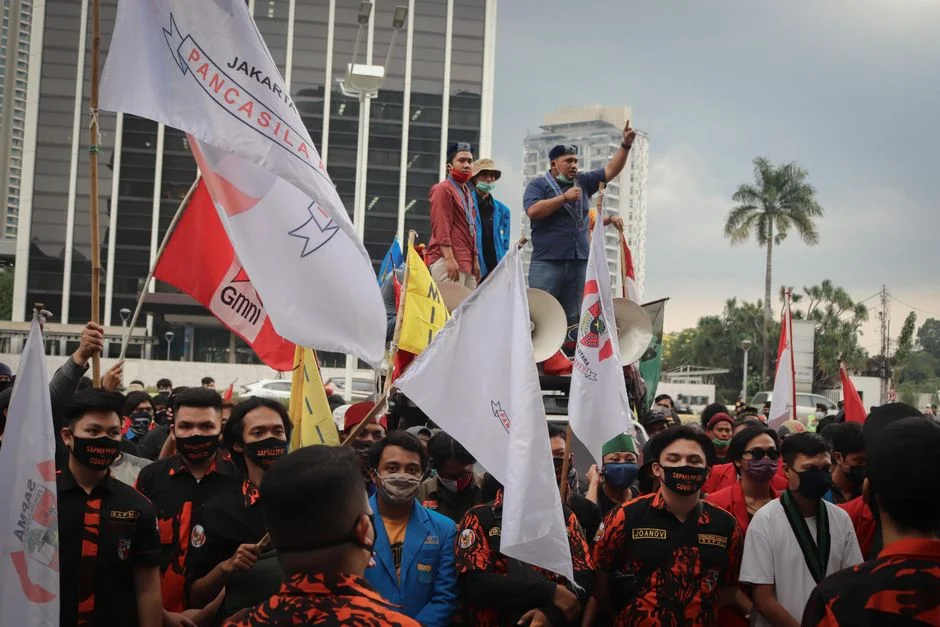
"We are confronting a deliberate campaign of lies," said a senior MK Party spokesperson during the remarks. "These baseless claims have no foundation in fact and appear designed solely to damage President Zuma's reputation ahead of critical political engagements."
Background of June Unrest
The unrest in question began in mid-June, catching authorities off guard as violence spread through communities in the greater Durban metropolitan area. Local police reported that groups of armed individuals attacked several businesses and clashed with security forces on multiple occasions over a period of roughly two weeks. The situation prompted the deployment of additional military units to restore order.
Investigations into the root causes of the violence remain ongoing. Authorities have not publicly identified any formal organisation as being behind the attacks, though speculation in political circles and media reports has at times pointed toward figures associated with former president Zuma.
Political Tensions in KwaZulu-Natal
The unrest occurred against a backdrop of heightened political competition in KwaZulu-Natal, traditionally an African National Congress stronghold that has seen increasing factional tension in recent years. Zuma maintains a devoted following in parts of the province, and the MK Party has been working to consolidate that support ahead of future electoral contests.
Political analysts have noted that linking Zuma to communal violence serves multiple narratives simultaneously, potentially weakening both his personal standing and the broader opposition to the current government.
MK Party's Denials and Counter-Narrative

The MK Party has adopted an aggressive public relations strategy to counter the allegations. Party structures have been mobilised to distribute counter-messaging through community networks, social media platforms, and public gatherings. Organisers have encouraged supporters to document and report what they describe as instances of media bias and political manipulation.
The party's leadership has also called on the South African Police Service to investigate the origins of the false claims rather than pursuing investigations that target Zuma associates. According to party officials, no member of the MK movement has been formally charged in connection with the June violence.
Broader Implications for South African Politics
The controversy arrives at a delicate juncture for South Africa's political landscape. The MK Party, which emerged from Zuma's influence despite his formal separation from the ANC, has been steadily building its organisational capacity across several provinces. Any credible association with civil unrest could complicate the party's ambitions to secure meaningful representation in future elections.
Meanwhile, Zuma himself remains a polarising figure whose legal troubles—including previous corruption cases and an unrelated contempt of court conviction—continue to dominate headlines. The intersection of his personal legal standing with the political activities of the MK Party creates overlapping vulnerabilities that opponents are keen to exploit.
What Comes Next
Observers expect the MK Party to maintain its aggressive posture against what it characterises as a hostile information environment. The party has scheduled additional public meetings throughout July and August, events that will likely double as opportunities to reinforce its denial campaign and recruit new supporters. Police investigations into the June unrest are expected to conclude by September, according to a statement from the justice ministry. Whether those findings produce any credible evidence linking Zuma or his allies to the violence remains to be seen. For now, the MK Party shows no sign of retreating from its defence of the former president, framing the allegations as a political weapon rather than a genuine law enforcement matter.
See Also
- IPL 2026 Standings: Who Leads the Race for the Trophy
- Sonny Styles Joins NFL as First-Round Pick — Why It Matters for Ohio State
What is the latest news about mk party denounces baseless propaganda linking zuma to june unrest?
Why does this matter for culture-arts?
What are the key facts about mk party denounces baseless propaganda linking zuma to june unrest?