Saudi Arabia has imposed strict new regulations for the upcoming 2026 Hajj pilgrimage, introducing severe financial and temporal penalties for pilgrims who fail to adhere to the updated protocols. The Ministry of Hajj and Umrah announced that violators could face fines reaching SAR 20,000, immediate deportation, and a decade-long ban from entering the Kingdom. These measures signal a decisive shift in how the Kingdom manages the annual influx of millions of Muslims, aiming to enhance the quality of the spiritual experience while exerting greater control over the logistical flow.
New Penalties for Pilgrims
The new regulatory framework targets specific behaviors that have historically caused congestion and friction in the holy cities of Mecca and Medina. Pilgrims who arrive early without proper visas, overstay their designated periods, or fail to utilize the mandatory digital platforms will be subject to immediate financial penalties. The SAR 20,000 fine represents a substantial cost for many pilgrims, particularly those traveling from African and Asian nations where currency exchange rates can make the penalty equivalent to a month’s salary.
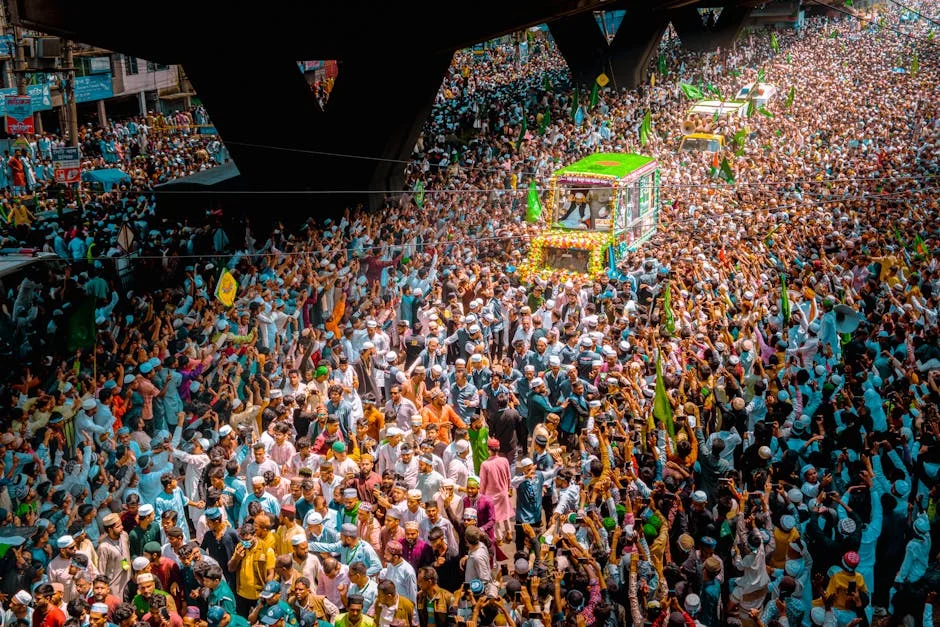
Deportation serves as the immediate physical consequence for non-compliance, often requiring pilgrims to return to their home countries at their own expense. However, the most enduring punishment is the ten-year entry ban. This measure effectively removes a pilgrim from the Saudi tourism and pilgrimage market for a significant portion of their life. It forces families and travel agencies to plan with greater precision, knowing that a single mistake could exclude an individual from performing the fifth pillar of Islam for over a decade.
Digital Transformation of the Ritual
The enforcement of these rules relies heavily on the Kingdom’s ongoing digital transformation of the Hajj experience. The Ministry of Hajj and Umrah has mandated the use of a unified digital platform where pilgrims must register, book services, and track their movement in real-time. This technology allows authorities to monitor crowd density in key locations such as the Mataf, the open area surrounding the Kaaba, and the plain of Arafat. Data from these platforms enables officials to disperse crowds dynamically, reducing the risk of stampedes and heat exhaustion.
Pilgrims who ignore these digital directives, such as arriving in Mecca days before their official group arrival or failing to check out before their visa expires, are flagged automatically. The system integrates with the General Directorate of Passports to ensure that overstayers are caught at the border or in the streets. This technological integration marks a departure from the traditional, sometimes chaotic, methods of crowd control that relied heavily on physical barriers and police presence.
Impact on Travel Agencies
Travel agencies acting as middlemen for pilgrims face increased scrutiny under the new rules. The Ministry has held these agencies accountable for the behavior of their clients, meaning that if a significant number of pilgrims from a single agency violate the rules, the agency itself may face sanctions. This shifts the burden of education and preparation from the individual pilgrim to the organizational structures that facilitate their journey. Agencies in countries like Egypt, Indonesia, and Turkey are now required to conduct more rigorous briefings for their clients to avoid collective penalties.
The financial risk for these agencies is considerable. If an agency loses its license or sees its quota reduced due to poor client management, it affects thousands of pilgrims in subsequent years. Consequently, agencies are investing more in pre-departure training and digital literacy programs. They are ensuring that every pilgrim understands how to use the official app and adhere to the strict timelines set by the Saudi authorities. This professionalization of the pilgrimage industry is a direct result of the Kingdom’s desire to streamline the operation.
Context of the 2026 Pilgrimage


The 2026 Hajj takes place against the backdrop of Saudi Arabia’s broader Vision 2030 initiative, which aims to diversify the Kingdom’s economy and elevate its status as a global hub for tourism and religion. The pilgrimage is not just a spiritual event but a significant economic driver, contributing billions of riyals to the national treasury. By tightening the rules, the Kingdom is signaling that it is willing to sacrifice some short-term flexibility for long-term efficiency and brand prestige. The goal is to present a seamless, modern experience that justifies the premium prices associated with the pilgrimage.
Historically, the Hajj has been characterized by a mix of awe-inspiring spirituality and logistical challenges. Issues such as overcrowding, high temperatures, and bureaucratic hurdles have long been part of the narrative. The introduction of the ten-year ban is a direct response to these persistent problems. It is a clear message that the Kingdom is no longer willing to tolerate the "first-come, first-served" mentality that often leads to chaos in the holy sites. The authorities are using the ban as a lever to enforce order and predictability.
Geographic and Economic Implications
The impact of these new rules will be felt most acutely in countries with large Muslim populations that rely heavily on the Hajj as a cultural and religious milestone. In nations like Nigeria, Pakistan, and Bangladesh, the cost of the pilgrimage is already a significant financial burden for many families. Adding the risk of a SAR 20,000 fine changes the risk calculus for these pilgrims. Families may need to save for longer periods to create a financial buffer against potential penalties. This could lead to a slight delay in the timing of the pilgrimage for some, or a shift towards more expensive, fully-managed packages that offer greater peace of mind.
For the Saudi economy, the stricter regulations are designed to increase the yield per pilgrim. By controlling the flow and duration of stays, the Kingdom can better manage accommodation and transport infrastructure. This prevents the market from becoming saturated with low-spending, short-stay visitors who strain resources without contributing proportionally to the local economy. The focus is shifting towards quality over quantity, with an emphasis on maximizing the economic contribution of each individual pilgrim. This strategy aligns with the broader economic goals of the Kingdom, which seeks to make the pilgrimage a more lucrative and sustainable industry.
Enforcement Challenges
Despite the clarity of the new rules, enforcement remains a complex logistical challenge. With millions of pilgrims converging on a relatively small geographic area, identifying every violator requires a high level of coordination between multiple government agencies. The Ministry of Hajj and Umrah must work closely with the Ministry of Interior, the General Authority of Statistics, and the Ministry of Transport to ensure that data flows smoothly and decisions are made quickly. Any lag in communication could result in inconsistencies in how penalties are applied, leading to perceptions of unfairness among pilgrims.
There is also the human element to consider. Pilgrims are often elderly or traveling in large family groups, which can make adherence to strict digital timelines difficult. Language barriers and varying levels of technological literacy can lead to unintentional violations. The authorities have acknowledged these challenges and have introduced multilingual support teams and digital kiosks in key locations. However, the effectiveness of these measures will only be fully tested during the actual pilgrimage. The success of the 2026 regulations will depend on how well the Kingdom can balance technological precision with human flexibility.
Future Outlook for Pilgrims
As the 2026 Hajj approaches, pilgrims are advised to review the new regulations carefully and ensure that their travel agencies are fully compliant with the latest requirements. The window for booking is narrowing, and the cost of mistakes is rising. Those who fail to adapt to the new digital and temporal constraints risk not only financial loss but also a long-term exclusion from the holy sites. The Kingdom’s message is clear: the modern Hajj requires modern preparation, and the cost of complacency is higher than ever. Pilgrims should monitor official announcements from the Ministry of Hajj and Umrah for any last-minute adjustments to the rules.
Geographic and Economic Implications The impact of these new rules will be felt most acutely in countries with large Muslim populations that rely heavily on the Hajj as a cultural and religious milestone. In nations like Nigeria, Pakistan, and Bangladesh, the cost of the pilgrimage is already a significant financial burden for many families.