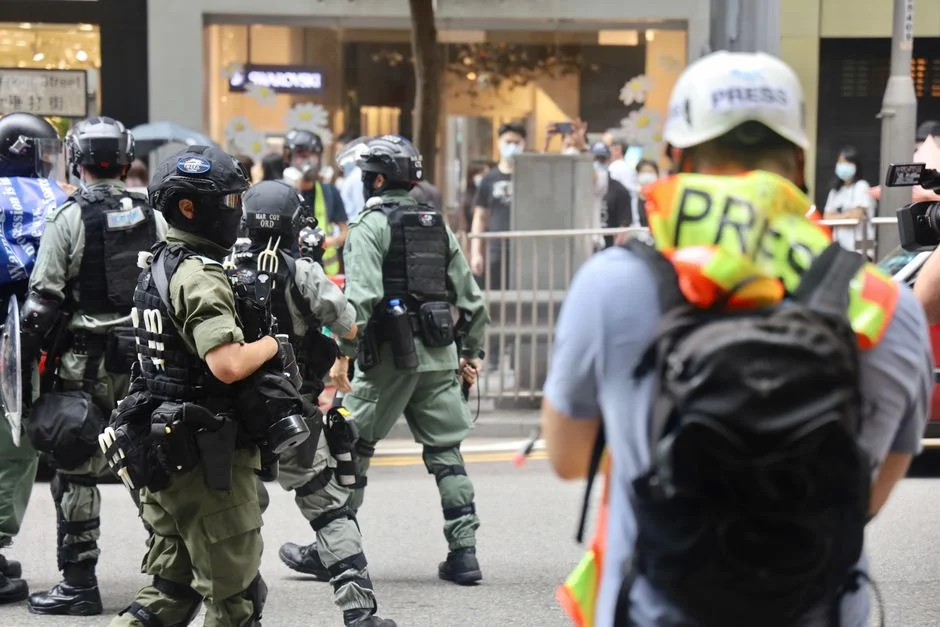
King Mswati III of Eswatini has intensified his grip on power by banning opposition gatherings and restricting media freedoms, sparking international concern over the country’s democratic decline. The crackdown, which began in late 2023, has seen security forces arrest journalists and activists under laws that critics say criminalise dissent. The move comes as the monarchy faces growing pressure from both domestic and foreign actors, including the United States, which has called for greater political openness.
Crackdown Intensifies After Protests
Protests erupted in Eswatini in 2021 after the government announced a controversial tax increase, drawing widespread public anger. In response, Mswati declared a state of emergency and deployed security forces to quell dissent. Since then, the government has maintained strict control, with the National Security Council issuing directives that limit free speech and assembly. In 2023, the Council passed a new law that criminalises “unauthorized public gatherings,” a measure activists say is used to silence critics.
The government has also targeted independent media. In October 2023, the state-owned Eswatini Daily Mail was ordered to cease operations after publishing an article that questioned the monarchy’s handling of the economy. The paper’s editor, Thandiwe Dlamini, was later arrested and charged with “disinformation.” Dlamini, a veteran journalist, has been a vocal advocate for press freedom in the region.
International Response and Domestic Fears
The United States has condemned the crackdown, with State Department spokesperson Ned Price stating in November 2023 that “Eswatini’s government must respect the rights of its citizens and allow for open political discourse.” However, the U.S. has also maintained economic ties with Eswatini, which is a key partner in regional trade and security. This duality has left many local activists frustrated, arguing that foreign pressure has not translated into real change.
Domestically, the repression has deepened fears of a return to authoritarian rule. In February 2024, a coalition of civil society groups warned that the government’s actions could destabilise the country. “We are witnessing a systematic erosion of democratic norms,” said Sipho Mkhize, a human rights lawyer based in Mbabane, the capital. “The king’s word is now the law, and there is no room for criticism.”
Impact on Economy and Society

Eswatini’s economy, already fragile, has suffered under the government’s restrictive policies. The country, which relies heavily on agriculture and tourism, has seen a decline in foreign investment. In 2023, the International Monetary Fund (IMF) reported that Eswatini’s GDP growth slowed to 2.1%, the lowest in a decade. The government has blamed external factors, including global inflation, but critics argue that internal repression is a major contributor.
Unemployment remains a key issue, with nearly 30% of the youth population jobless. The government has introduced several economic reforms, including a new industrial policy, but these have been overshadowed by the political crackdown. “People are tired of the same old promises,” said Noma Dlamini, a small business owner in Manzini. “We need real change, not just more restrictions.”
Eswatini’s Political Landscape
The monarchy, which has ruled Eswatini since the 19th century, has long maintained a tight grip on power. Mswati, who came to the throne in 2018, has consolidated authority through patronage and control of the military. His government has also expanded the role of traditional leaders, a move that critics say undermines modern governance structures. In 2023, Mswati appointed a new council of chiefs, a move that many saw as an attempt to bypass elected officials.
Despite the repression, some political factions remain active. The People’s United Democratic Party (PUDP), the country’s main opposition party, has called for constitutional reforms and greater accountability. However, the party has struggled to gain traction, with many members facing harassment or exile. “We are not afraid,” said PUDP leader Sipho Dlamini. “But we need the international community to stand with us.”
What’s Next for Eswatini?
The coming months will be critical for Eswatini’s future. In March 2024, the government is expected to announce new economic policies, which could either ease or worsen the country’s challenges. Meanwhile, international pressure is likely to grow, particularly as the U.S. and other donors reassess their support for the regime. Civil society groups are also preparing for a potential wave of protests, with some calling for a national dialogue on governance and human rights.
For now, the silence of the opposition and the restrictions on free speech suggest that Mswati’s rule remains unchallenged. But as the economy struggles and public frustration grows, the long-term stability of Eswatini remains uncertain. What happens next could determine whether the country moves toward reform or further repression.
See Also
- Gautam Gambhir to Face Delhi High Court Over Personality Rights on March 23
- Brazil's Central Bank Slams Currency Speculation — Markets React Volatile
What is the latest news about eswatini king mswati bans opposition amid crackdown?
Why does this matter for economy-business?
What are the key facts about eswatini king mswati bans opposition amid crackdown?