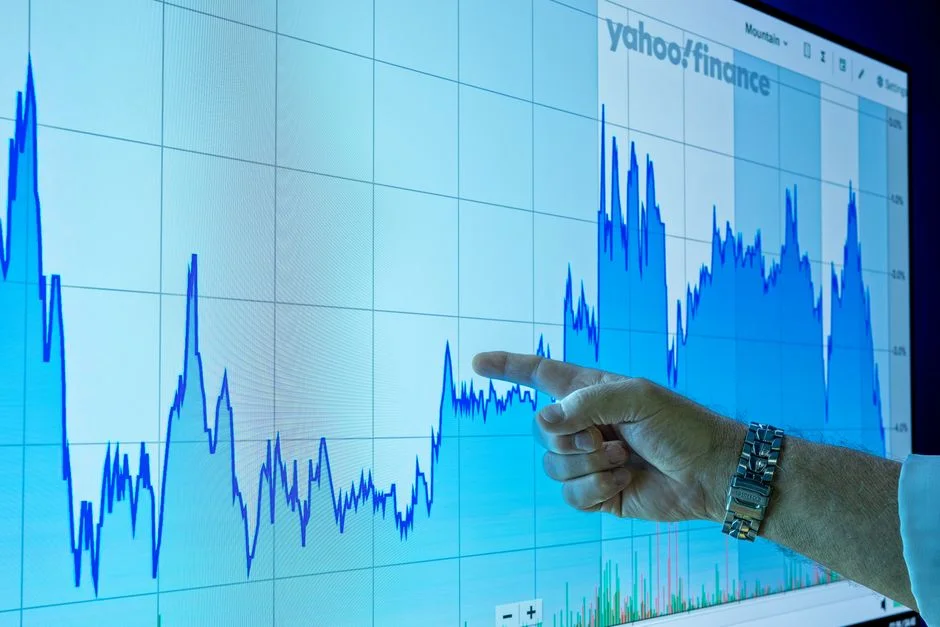
The Nifty 50 index, India's benchmark equity benchmark, has shown signs of recovery, rising to 24,200 on Tuesday amid mixed signals from global markets. The index has gained 1.2% over the past week, but faces a critical resistance zone between 24,300 and 24,700, a level that analysts say could determine the next phase of its movement. This comes as the Reserve Bank of India (RBI) continues to monitor inflation, which remains above the central bank’s target of 4%. The index’s performance is closely watched by investors in the United States, where many have exposure to Indian markets through mutual funds and ETFs.
Market Momentum and Technical Challenges
The Nifty has been on a gradual upward trend since late July, supported by improved corporate earnings and a slowdown in inflation. However, technical analysts warn that the index is approaching a key resistance level that could stall further gains. "The 24,700 level is a psychological barrier," said Rajesh Gupta, a senior analyst at Axis Capital. "If the index fails to break above it, we could see a pullback to 23,800." This resistance zone has historically been a point of volatility, with the index testing it multiple times in the past year.

Despite the challenges, the index has managed to hold above 24,000, a level that many traders consider a crucial support. "The market is showing resilience," said Priya Malhotra, a fund manager at Franklin Templeton. "But we need to see sustained buying interest above 24,300 to confirm a longer-term uptrend." Investors are also watching the U.S. Federal Reserve’s policy decisions, which could influence global capital flows and, in turn, affect the Nifty’s trajectory.
Analysts' Diverging Views
While some analysts remain optimistic, others caution against overconfidence. "The Nifty is in a consolidation phase," said Arun Sharma, a technical analyst at ICICI Securities. "We’re seeing increased volatility, which suggests uncertainty among market participants." This divergence in opinions reflects the broader sentiment in the market, where both domestic and global factors are influencing investor behavior.
The improving economic outlook in India has also played a role in the index’s performance. The government’s recent announcement of tax cuts for small businesses and increased infrastructure spending has boosted confidence among investors. However, concerns over rising crude oil prices and a potential slowdown in global demand continue to weigh on the market. "The Nifty is caught between domestic optimism and global uncertainty," said Malhotra.
Global Influences and Domestic Factors
Global markets have had a mixed impact on the Nifty. The U.S. stock market has shown signs of weakness, with the S&P 500 falling 0.8% last week. This has led to a cautious approach from foreign institutional investors (FIIs), who have been net sellers in the Indian market for the past three weeks. "FIIs are waiting for more clarity on the U.S. economy before making large bets," said Gupta.
Domestically, the RBI’s decision on interest rates in August is a key event to watch. The central bank has kept rates unchanged for the past three months, but many economists expect a rate cut in the coming quarters. "A rate cut would provide a boost to the Nifty by lowering borrowing costs for businesses," said Sharma. However, the RBI is also monitoring inflation closely, which remains at 6.2% as of July, above its target.
What to Watch Next


Investors will be closely watching the Nifty’s performance over the next two weeks, especially after the RBI’s monetary policy announcement on August 5. A break above 24,700 could signal a stronger uptrend, while a drop below 24,000 may trigger further selling. The index’s movement will also depend on the U.S. Federal Reserve’s next move, which is expected in September. "The next few weeks will be crucial," said Malhotra. "If the Nifty can hold above 24,500, we could see a more sustained recovery."
For U.S. investors, the Nifty’s performance remains an important indicator of the health of the Indian economy. As the index continues to navigate technical and macroeconomic challenges, its direction will have ripple effects across global markets. Investors should remain cautious but watchful, as the coming weeks could determine the next phase of the Nifty’s journey.
See Also
- Bury FC Boss Praises Shakers' Resolve in Crucial Fixtures
- Police Issue Warning as LPG Shortage Spreads Rumours - Market Impact Explained