A new study has uncovered evidence that giant echidnas, weighing up to 15kg, once roamed the landscapes of Victoria, Australia, during the Pleistocene epoch. The discovery, made by researchers at the Australian National University, challenges previous assumptions about the size and diversity of ancient fauna in the region. The findings, published in the journal *Palaeontology*, reveal that these creatures were significantly larger than their modern counterparts, which typically weigh around 2kg.
Unearthing the Past
Researchers uncovered fossilized remains of the giant echidnas in sediment layers near the town of Warrnambool, Victoria. The bones, dating back approximately 50,000 years, suggest that these mammals were part of a unique ecosystem that thrived during the last Ice Age. Dr. Emily Carter, a paleontologist at the Australian National University, led the research team and emphasized the significance of the discovery. "This is the first time we've found clear evidence of such large echidnas in Australia," she said. "It changes our understanding of how these animals evolved."
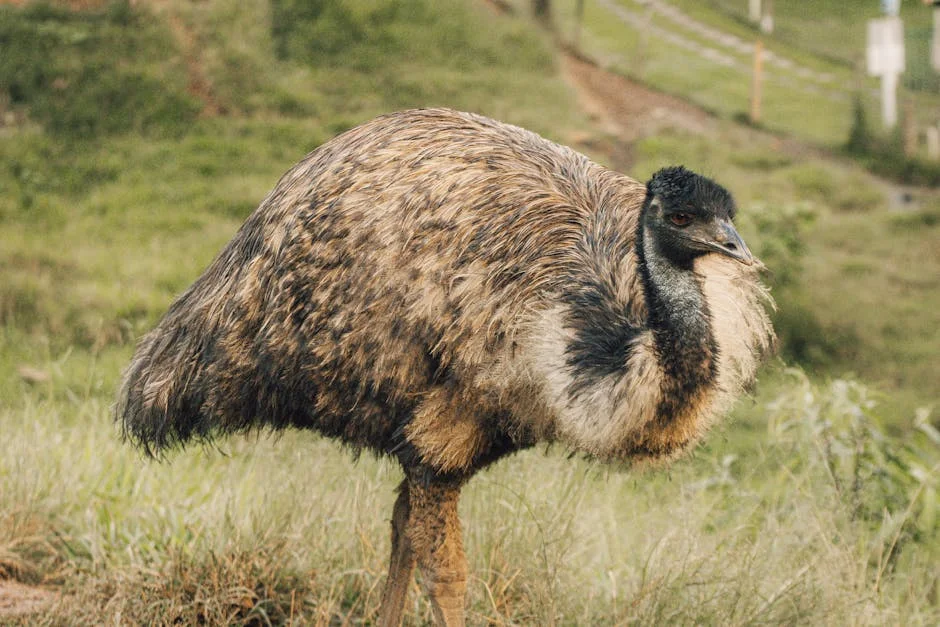
The study compared the fossils to those of modern echidnas and found key differences in bone structure and size. The larger size may have been an adaptation to the cooler climate of the Pleistocene. "These animals likely had a different diet and behavior than today's echidnas," Carter explained. "They may have been more active and covered larger territories."
Ecological Implications
The discovery has broader implications for understanding Australia's prehistoric ecosystems. During the Pleistocene, the continent was home to a range of megafauna, including giant kangaroos and marsupial lions. The presence of giant echidnas adds another layer to this complex picture. "It shows that the evolutionary pathways of Australian animals were more diverse than we previously thought," said Dr. Mark Thompson, a zoologist at the University of Melbourne, who was not involved in the study.
The research also highlights the importance of preserving fossil sites in Victoria. "These findings are only possible because of the well-preserved geological record in this region," Thompson noted. "It's a reminder of how much we still have to learn about our planet's past."
What This Means for Modern Conservation


While the giant echidnas are long extinct, their existence offers insights into the adaptability of modern species. Conservationists are now looking at how climate change and habitat loss might affect current echidna populations. "Understanding the past can help us make better decisions for the future," said Dr. Lisa Nguyen, a conservation biologist at the Australian Wildlife Conservancy. "If we can learn from how these animals survived in the past, we may be able to protect them better today."
Nguyen also pointed out that the study could influence public awareness of Australia's natural history. "People often think of Australia as a land of unique but small animals," she said. "But this discovery shows that our continent was once home to some truly remarkable creatures."
Future Research and Public Engagement
The research team plans to conduct further excavations in Victoria to find more evidence of giant echidnas and other prehistoric animals. They are also working with local museums to create exhibits that will bring the findings to the public. "We want to share this story with as many people as possible," said Dr. Carter. "It's not just about science—it's about connecting with our natural heritage."
Meanwhile, the study has sparked interest among both scientists and the general public. Online discussions about the discovery have seen a surge in engagement, with many sharing their excitement about Australia's ancient past. The research is also being used in educational programs to teach students about evolution and paleontology.
Looking Ahead
The next phase of the study will focus on analyzing the diet and behavior of the giant echidnas through isotopic analysis of their fossils. Researchers hope to publish their findings by the end of the year. Meanwhile, the Australian National University is planning a public lecture to discuss the implications of the discovery. "This is just the beginning," said Dr. Carter. "There's still so much to learn about our planet's history."
See Also
- MPs Demand Ban on Forever Chemicals in School Uniforms and Cookware
- South Africa Crushes England Lions 10-1 in Historic Win
Looking Ahead The next phase of the study will focus on analyzing the diet and behavior of the giant echidnas through isotopic analysis of their fossils. "These findings are only possible because of the well-preserved geological record in this region," Thompson noted.