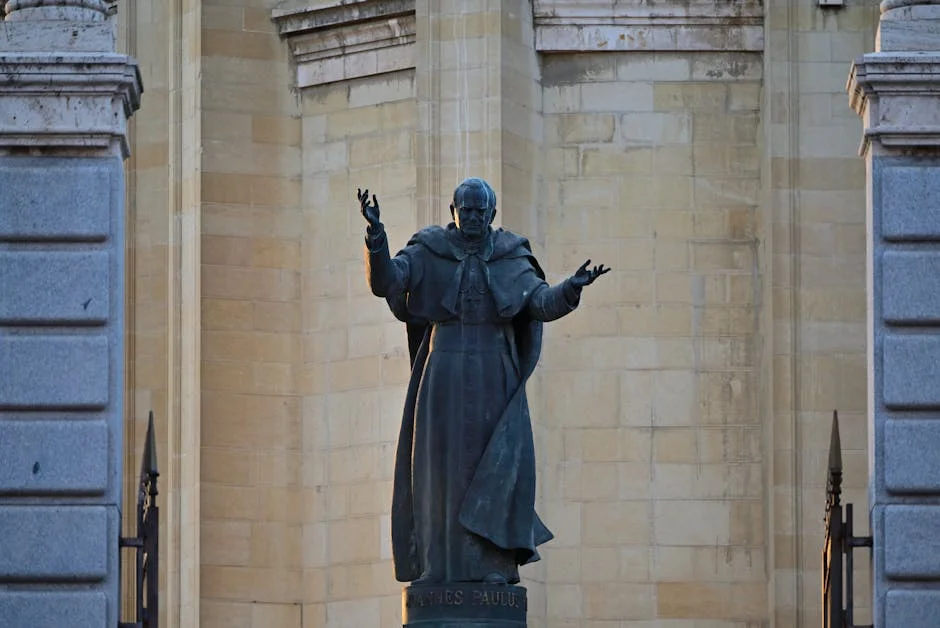
Donald Trump, the former US president, has refused to apologise to the Pope for remarks he made during his 2016 campaign that critics said were disrespectful to religious leaders. The incident, which took place in 2016, has resurfaced as tensions between the Vatican and the former administration continue to simmer. The Pope, who has been vocal about his disapproval of Trump’s policies on immigration and climate change, has not yet publicly commented on the latest development.
What Happened and Why It Matters
During the 2016 presidential campaign, Trump made a series of controversial statements about religious leaders, including the Pope, which were widely criticised. In a speech in New York, he referred to the Pope as “a very good man” but also suggested that the Church should not interfere in political matters. At the time, the Vatican did not issue a formal response, but the remarks were seen as a provocation by some religious observers.
The issue has gained renewed attention after a recent interview in which Trump was asked about his past comments. He stated that he would not apologise to the Pope, saying, “He’s a very good man, but I don’t think I need to.” This refusal has sparked debate among religious leaders and political analysts, who argue that such statements could damage diplomatic relations between the US and the Vatican.
Historical Context and Religious Tensions
The Vatican has long maintained a complex relationship with American politics, particularly with leaders who have taken controversial stances on social and moral issues. In 2016, the Pope expressed concerns about Trump’s policies on immigration and environmental protection, calling for greater compassion and global cooperation. These views were in stark contrast to Trump’s rhetoric, which often framed immigration as a security threat and downplayed the urgency of climate change.
Religious leaders in the US have also weighed in, with some calling for greater respect for religious institutions. Cardinal Timothy Dolan, the Archbishop of New York, said that Trump’s comments reflected a “lack of understanding” of the role of faith in public life. The Vatican, meanwhile, has remained largely silent on the matter, though it has continued to push for policies that align with its moral teachings.
Impact on US-Vatican Relations

The refusal to apologise has raised concerns about the future of US-Vatican relations, which have been strained in recent years. The Vatican has been a vocal critic of Trump’s policies on immigration, and his administration has not been known for close collaboration with the Church. In 2017, the Vatican expressed disappointment over Trump’s decision to withdraw from the Paris climate agreement, a move that was seen as a blow to global environmental efforts.
Despite this, the Vatican has maintained a neutral stance on Trump’s personal conduct, focusing instead on broader policy issues. However, the recent refusal to apologise has led to renewed calls for dialogue and mutual respect. Some observers suggest that the Vatican may be waiting for a formal apology before engaging in more direct discussions with the US government.
What to Watch Next
The next major event to watch will be the upcoming visit by the Vatican’s envoy to the US, which is expected to take place in late 2024. This visit could provide an opportunity for the two sides to address concerns and rebuild trust. Meanwhile, the Pope has not yet responded publicly to Trump’s refusal to apologise, but many believe that a formal statement may come in the coming weeks.
For now, the issue remains a point of contention between religious leaders and political figures in the US. As the 2024 election season approaches, the role of faith in public life is likely to remain a hot topic, with implications for both domestic and international relations.
Looking Ahead: What Comes Next
The coming months will be critical in determining how the Vatican and the US government navigate their differences. With the 2024 election on the horizon, the issue of religious respect and diplomatic relations is likely to be a topic of increasing debate. The Vatican may also seek to engage with other US leaders who have shown greater support for its values, such as former President Joe Biden.
For now, the focus remains on the Pope’s potential response and the Vatican’s next steps in addressing the issue. As the political landscape continues to evolve, the relationship between the US and the Vatican will remain a key factor in shaping global religious and diplomatic discourse.